21st November 2008 02:26 pm


Aliens at the Eyes?

Douglas Buchanan

Well in the science fiction sense of course not. So having caught your attention I owe a word of explanation. Alien as term catches the eye hence its use in the title but it is not a biological term for it is not defined in either the Oxford Dictionary of Natural History,[1] nor the Dictionary of Birds[2]. However I am not entirely alone in the use of the term as The Guardian referred to alien species in an article about the cost of dealing with two of the species to be discussed below, namely Giant Hogweed and Japanese Knotweed which are present at the site of the 2012 Olympic games.[3]

So if not Martians on the meadows what am I going to write about?

Well the Eyes are made up of material dredged from the ship canal and inevitably this material includes seeds and other viable vegetable matter. In addition to native plant species there are number of non-native animal species causing problems or with the potential to cause problems. In this article I will deal with three plant and three animal species and briefly with a fourth.

A better term for the plants and animals I am going to discuss is “Invasive Non-Native Species”. These are defined in a Scottish Executive publication as “ …one that has been transported outside of its natural range and that threatens environmental, agricultural or economic resources.”

Non native species are considered by the World Conservation Union (IUCN) to be one of the primary threats to global biodiversity, second only to habitat destruction.

Because these Non-natives have been transported by the agency of man outside their normal habitat they are usually not subject to the checks of natural predators and competitors so that they can dominate suitable habitats. At the same time they can be a sterile environment for native wild life.

Invasive weeds are not necessarily non-native. Native species can become invasive weeds in disturbed or nutrient rich conditions.[4] The lush growth of native species such

Broad Leaved Willow Herb.


as Rosebay Willowherb (Chaemerion angustifolium)[5], Great Willowherb (Epilobium hirsutum) and Common Nettle (Urtica dioica) on No 3 bed providing good evidence. Interestingly Rosebay Willow herb was considered to be an uncommon species more often found in gardens until the second half of the 19th Century.[6] The spread of this plant was associated with the large scale soil disturbance consequent on railway building in the mid 19th Century and later forest clearance in WW1 and bomb sites in WW2.

Extensive patch of Rosebay Willowherb, No 3 Bed.

Invasive Non-native plant species at the Eyes

It is not surprising that the Eyes are host to the three commonest invasive non native species found in the UK. The site has been built up over many years from dredging material from the upper Mersey basin and this includes lots of viable seeds. In general the silt deposited makes for a fertile soil as can be seen from the lush growth on No 3 bed. There are however some areas of poor fertility for example a part of the North meadow on No 3. These areas of poor soil are attributable to dredgings from the outlet of the river Bollin which brings down sandy material from the Millstone grit of the Pennines.

I will now discuss the three important Invasive non-native plant species found at the Eyes.


1. Giant Hogweed (Heracleum mantegazzianum)

This plant is widespread at the Eyes.  A large stand of the plant can be seen on No 2 bed from the north-bound carriageway of the Thelwall Viaduct in summer and it is widely distributed on No 4 bed. The plant like the others to be considered here was first brought to the UK as an ornamental garden plant in this case in the 19th century from its native Caucasus.[7] It is a member of the family Umbelliferae of which there are a number of other native members on the Eyes including  Angelica archangelica. According to Mabey Giant Hogweed was a curiosity attracting little attention until 1970 when numbers of children started attending accident departments with burns to their lips hands and eyes. They had been using the stems as blowpipes and “telescopes”.[8] The effect of the irritant sap is made worse by sunlight for which the medical term is photosensitisation. After the blisters heal the subject is left with dark pigmentation which may persist for several years in more severe cases.[9] Clearly a plant to be avoided.


Giant Hogweed before flowering.


Giant Hogweed is a mono-carpic perennial. It grows for several years, flowers once and dies. Each plant can produce up to 50,000 seeds.  They can remain viable for up to 15 years. Control can be achieved by spraying with glyphosate best done when the plants are relatively young and fast growing. Cutting the flowering stems before they set seed is also a method of control but repeat treatments over several years may be

Colony of Giant Hogweed with seed heads. No 4 bed.


needed to eliminate the plant.[10] Control operators need to use effective protective clothing and equipment.

2. Himalayan Balsam (Impatiens glandulifera)

This is a relative of the well known Busy Lizzie used in gardens and as a house plant (Cultivars of Impatiens balsamina). Another garden introduction, this time from the Himalayas. It is said to have been introduced to the UK in 1839 and by the end of the 19th Century was widespread.[11] It is found in all but the higher areas of the UK often forming dense stands in its preferred habitat of damp soil beside streams and rivers. It is an annual plant with an explosive seed head capable of projecting seed up to seven metres.

Dense growth of Himalayan Balsam seedlings. Entrance to No 3 bed.


At the Eyes the effect of seed spread can be seen in springtime when suitable areas are covered in small seedlings most of which fail to grow to the flowering stage because of intense intra-specific competition. The dense stands of this plant effectively crowd out slower growing native species and as it dies down quickly and completely in winter the resultant bare earth does pose an erosion risk though I have not seen this at the Eyes. On the plus side the flowers do seem to be an attractive source of nectar for insects. The plant is widespread in the wetter areas of bed 3 in particular.


Dense Growth of Himalayan Balsam. View from South Bank of No 3.


Control measures are best designed to prevent the plant flowering. This means an assault in early summer with a weedkiller such as Glyphosate or 2,4-D amine. The former will kill all plants in the sprayed area, not usually a problem as Himalayan Balsam tends to be a monoculture. The latter will not kill grasses.[12]

Control can also be achieved by regular mowing or strimming over a three year period, suggesting that the seeds have limited viability. If cut too early, the plants produce more flowering shoots and hence more seed.

3. Japanese Knotweed (Fallopia japonica)

There are actually three species of Knotweed naturalised in the UK. In addition to Japanese knotweed we are also host to Giant Knotweed (Fallopia sachalinensis) and Hybrid Knotweed (Fallopia  x bohemica) a cross between Japanese and Giant Knotweed.[13] Japanese Knotweed is however the most common and troublesome of the three. The plant was, like the two species discussed above, brought into the UK as an ornamental. Interestingly only female plants are found in the UK so all spread is by vegetative means but the distribution over most of the UK except for land at higher altitudes suggests that the lack of seed has been no barrier to its spread.

The plant is rhizomatous and normally found in dense clumps. The rhizomes can spread seven metres from the parent plant and penetrate to 7 metres deep. Of the three species discussed it is most the likely to cause structural damage. It is a known cause of commercially significant damage from its ability to break through road surfaces and because of the high cost of eradication.[14] This plant is found at the Eyes but not as commonly as Giant Hogweed and Himalayan Balsam. There is a good example close to the second barrier beside the Ship canal.


Japanese Knotweed, beside second barrier.


Control is difficult. Because of the risk of transfer of vegetative material it is not permitted to remove material from a site without a waste license and any material removed should be buried at least 10 metres deep. Control by glyphosate is possible and best done when the plants are 1.5m tall in August or September.

Invasive Non-native species not yet found at the Eyes

In recent years increasing concern has been expressed about the harmful effects of non-native water plants becoming naturalised in the UK. These include Australian Stonecrop (Crassula helmsii) introduced as an oxygenating plant for ponds in 1927. It is found at over 1500 sites in the UK with a bias towards the south of England.[15] Given that the plant can be propagated by the transfer of quite small fragments in mud, there would seem to be a significant risk of its eventual appearance at the Eyes. The plant can grow in conditions from mud to water 3 metres deep. It out-competes native species.

Parrot’s Feather (Myriophyllum aquaticum) was also introduced as a pond oxygenator in 1960 and is now found at 150 UK sites including a small number in the Northwest. Only female plants are present in the UK.[16]

Floating Pennywort (Hydrocotyle ranunculoides) was also brought to the UK as a pond and aquarium plant. As yet it is present at only a few sites in the UK.[17] Control has proved difficult.

Alien animals

Red-eared Terrapin (Trachemys scripta elegans)

At first sight it may seem strange that this North American species is present at the Eyes but the photograph is clearly an individual of this species. It has been reported that around 30,000 individuals of this species were imported annually into the UK from the new world between 1975 and 1985.[18] Interestingly their conservation status in the Americas is near-threatened.[19] The diagnostic feature of the red stripe on the head is seen in the illustration below.

When bought as a small specimen the terrapin is manageable in an aquarium but they can grow to an animal of 2kg and 30cm in length. They have a good ability to escape from pens and no doubt, some have been released by owners who cannot cope with them, even though this is illegal. They can be environmentally damaging as they are known to eat bird’s eggs and dragon fly larvae.[20] The WECG suspects that they may be a predator affecting the breeding of water birds and our Black-necked Grebes (Podiceps nigricollis) in particular.


Red-Eared Terrapin. No 3 Bed taken from North West Hide. These animals seem to be shy. I have only seen them from a distance. This photo taken at approximately x100 magnification using a telescope and digital camera.


Fortunately their requirements for breeding mean that even if a pair is present they will be unsuccessful. The eggs, which are laid in sandy material and not incubated, require a temperature of 25 Celsius for sixty days to hatch. Here in Warrington we feel happy if we get this temperature for just a few days! The British Chelonia Group is of the view that this species of terrapin is unlikely to survive long in the UK. It is thought that the wild environment of the UK provides a poor diet lacking in Vitamin A coupled with the fact that terrapins do not eat at all when the outside temperature drops below 16-18 degrees C. They also need to sunbathe to synthesise vitamin D an essential factor in their absorption of Calcium for their shell.[21] This sunbathing habit makes it less difficult to detect them. As far as I am aware only two specimens have been seen at the Eyes at any one time. They are most likely to be seen on sunny summer days from the hide overlooking the North West pool on No 3 bed from where the photo was taken.


American Mink (Mustela vision)

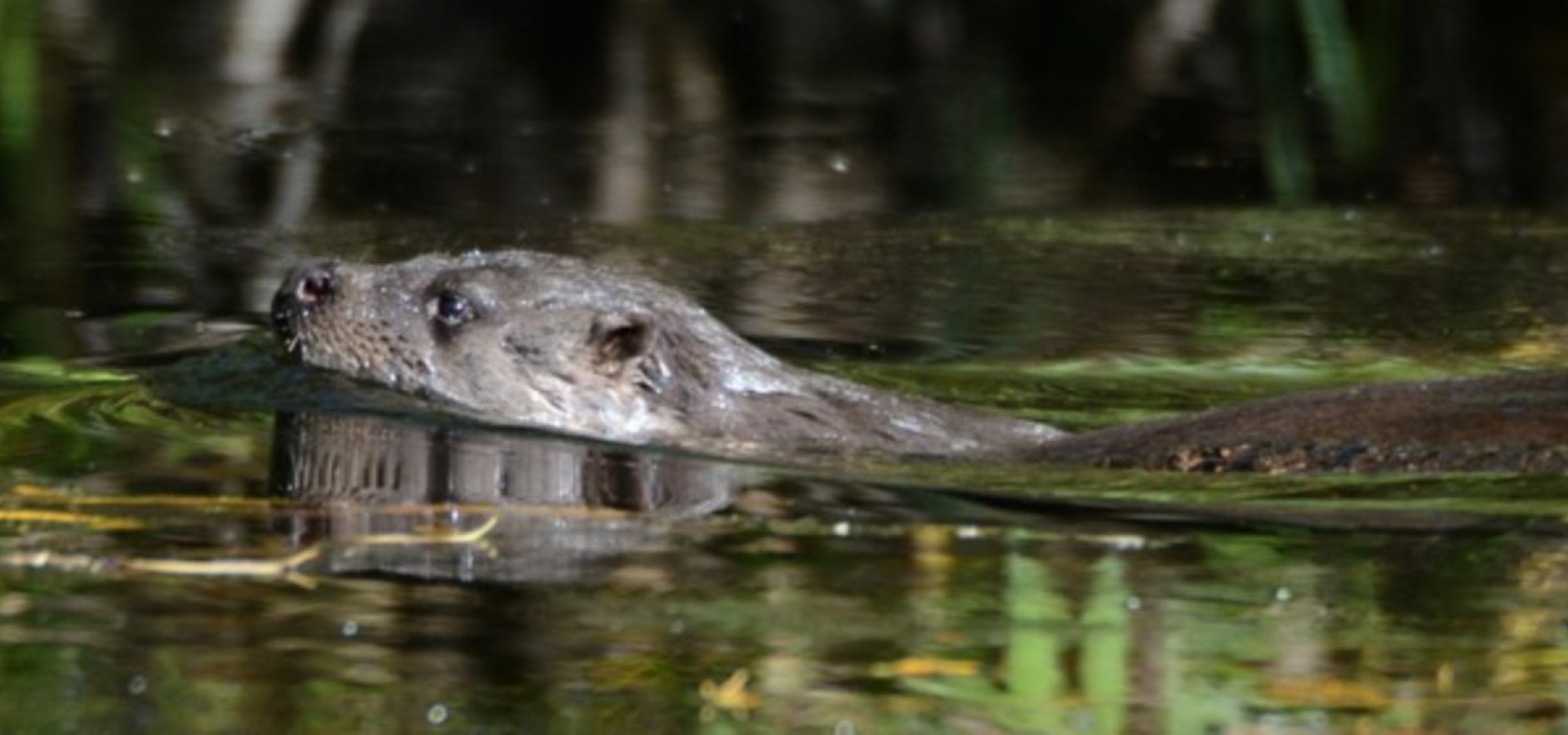
This relative of the European Mink (Mustela lutreola) is now widespread in the UK following escapes from fur farms. The latter species is now only found in Eastern Europe apart from a relict population in Western France. Both are members of the weasel family. Mink are found in aquatic habitats but having only partly webbed feet are not as aquatic as otters and much smaller.[22]

The American Mink is predatory on a wide range of animals. In the UK there is good evidence that they are implicated in the serious decline in water vole (Arvicole terrestris) populations and that they have had deleterious effects on seabird colonies on the west coast of Scotland.[23] In Eastern Europe they have by competition reduced populations of European Mink. It is thought that there are now over 100,000 American Mink in the UK and that eradication is not a practicable proposition. Local eradication is being tried on Scottish Islands.

Mink do not compete well with the larger otter. The gradual re-colonisation of English waterways by otters is likely to help the recovery of the water vole population as otters displace mink and are too large to pursue voles into their burrows. At the Eyes it is likely that the mink known to be present represent a predatory threat to breeding waterfowl. Control of mink populations is a part of the Species Action Plan for the water vole in the UK and the North Mersey Local Biodiversity Action Plan does include a species action plan for the water vole.[24]

Several members have seen mink at the site. In the light of the above evidence it is an agreed policy of the WECG to control Mink by trapping and we have had some success.


This is the last of eight mink trapped in the relatively short period between mid March and the end of May 2007.


Ruddy Duck (Oxyura jamaicensis)

Ruddy Duck male.


The ruddy duck issue has divided the UK birding community. While not afraid of controversy and strongly in favour of open discussion of areas of disagreement I decided to leave the risk of alienating readers until the near the end of this article.

Ruddy ducks are natives of North America. They were brought to the UK in the 1930s for wildfowl collections. It is documented that some young birds escaped from captivity in 1952 and the wild population has grown to over 6,000 pairs since then.[25]

The ruddy duck is mainly a summer breeding visitor to the Eyes with small numbers over wintering in mild winters. The Eyes still waters freeze quite quickly in cold weather causing all duck to move to the river or away. Up to 41 birds were recorded in June of 2004 but breeding was considered poor with only five broods being found. These ducks breed late in the season and the poor weather in August 2004 may have been responsible for the apparently poor breeding success.[26]

There is no evidence that the Ruddy duck causes any problem in the UK. However it is national policy in accordance with a European Union directive to eradicate the ruddy duck from the UK. This has the support of the RSPB and Wildfowl and Wetlands Trust.[27] Why is this so?

The difficulty arises because of the precarious position of another member of the stifftail family, the white-headed duck (Oxyura leucocephala). This species is the only stifftail found naturally in Europe. Hunting and habitat degradation have reduced its numbers in Europe by 90% to just about 10,000 individuals.[28] The Spanish population is the immediate issue. This fell to just 22 individuals in 1977 and has now recovered to 2,500. The recovery is however threatened by the ruddy duck which has moved from the UK to Spain. Ruddy ducks interbreed with white-headed ducks and as they are more competitive and can occupy a wider range of habitats they could well completely absorb the white-headed population. For the Spanish conservation authorities this would be as bad as the Red Kite disappearing from the UK.[29] This problem is not theoretical as an example from New Zealand demonstrates. In that country the introduced Mallard (Anas platyrhynchos) has largely absorbed the indigenous Grey Duck (Anas superciliosa superciliosa) such that only about 20% of the Mallard/Grey Duck population is now genetically pure Grey Duck.[30]

A detailed discussion of the importance of interbreeding of the two species of   stifftails would take us into a number of highly technical issues such as what is a species. I was brought up with the biological species concept. By this speciation is defined by breeding behaviour.[31] Using this concept O. jamaicensis and O. leucocephala would be one species and there would be little reason for the fuss. However the biological species concept no longer holds the roost. Modern authors accept that we are dealing with two species of stifftail in Europe. It is really a case of watching and waiting because the definition of species is currently in a state of flux due to the introduction of DNA technology. My own view is that I find it hard to accept that the environment would be much harmed by interbreeding of the two stifftails in Europe but at the same time I sympathise with the Spanish position and reluctantly go along with government policy. To my knowledge there has been no attempt yet to cull the Ruddy Ducks at the Eyes.

Grey Squirrel (Sciurus carolinensis)

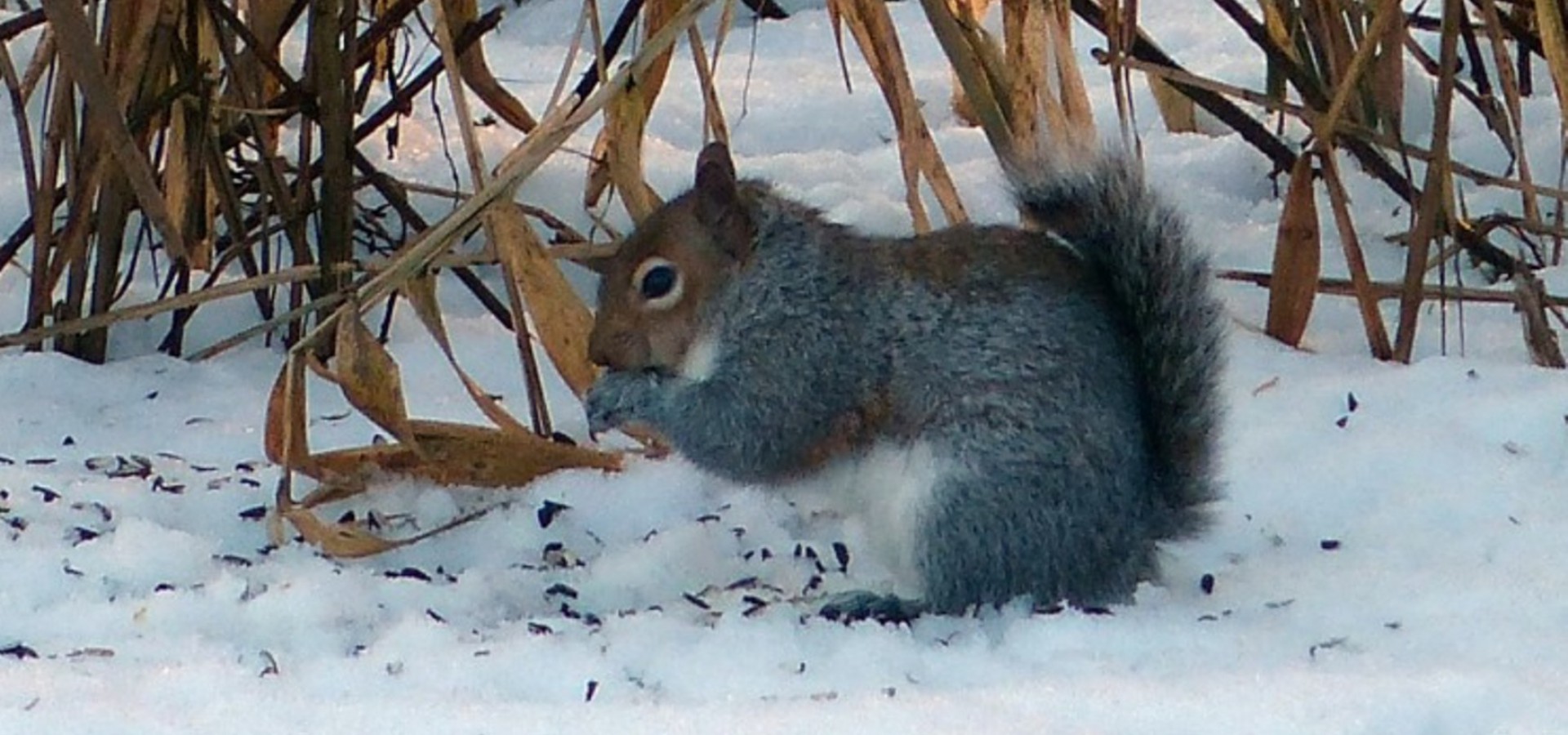
Definitely an alien. According to some authors the first grey squirrels were released in Henbury Park in Cheshire in 1876.[32] It is well known that Grey Squirrels have been in part responsible for the disappearance of the Red Squirrel (Sciurus vulgaris). Vulgaris being the Latin word for common reminds us that this was the only UK squirrel prior to 1876.

Given the history of the Eyes it is doubtful if Red Squirrels have ever been resident. Grey Squirrels are seen but there is no evidence that they cause any damage on the site so they will not be further discussed here. For more information look at http://www.jncc.gov/page-3224, http://www.yptenc.org.uk/docs/factsheets/animal_facts/grey_squirrel.html

http://www.wildlifetrust.org.uk/durham/RedAlert/RedSqUK.html


[1] Allaby (1985).

[2] Campbell and Lack (1985).

[3] The Guardian 20.09.05 (2005) p 8.

[4] Environment Agency (2003) p 3

[5] Chaemerion according to Streeter (1983) but Mabey (1996) gives Chamerion.

[6] Mabey (1996) p 236

[7] The date of introduction is variously given as early or late 19th century. The Environment Agency publication is specific to the year 1893 but Mabey cites evidence of its presence as early as 1835 in  a Bayswater garden.

[8] Mabey (1996) p 294

[9] Environment Agency (2003) p 10

[10] Environment Agency (2003) p 11

[11] Mabey (1996) p 275

[12] Environment Agency (2003) P 12

[13] Environment Agency (2003) p 8

[14] Scottish Executive Website; Invasive Non-native Species consulted 19/08/05

[15] Environment Agency (2003) p 14

[16] Environment Agency (2003) p 16

[17] Environment Agency  (2003) p 18

[20] Bristol Zoo, ibid.

[21] British Chelonia group, ibid.

[22] Corbet G. and Ovenden D. (1980) p 181 and 184

[23] Centre for Conservation Science (2005)

[25] www.rspb.org.uk/policy/species/index.asp. (2005). I am advised by David Norman the there is a detailed account of the  escape and spread of Ruddy ducks in Sir Christopher Lever's book The 

Naturalized Animals of the British Isles published by Hutchinson in 1977 (A new edition came out last year). Lever's description is based on Robert Hudson's paper in British Birds 69 132-143 (1976).  The  forward is written by Peter Scott in which he says ‘Having been  carelessly responsible myself for allowing the North American Ruddy  Duck to escape and build up to what seems to be a small but viable  population in England , I am in no position to pass judgement on  others. To be sure the Ruddy Duck is decorative and apparently  harmless but who knows what insidious effect it may have on the 

ecological web. I really should not have allowed them to fly out into the countryside - although they look delightful in flight.’  Prophetic words indeed.

[26] WECG (2005) p

[28] rspb ibid

[30] wwt ibid

[31] Brooke M. and Birkhead T. (1991) p 83


Homepage | Newsletter | Latest News | Bird Surveys Sightings
Flora and Fauna | Where are we? | Who are we? | Permits | History | Habitat |
Articles | Shopping | Links

Any queries regarding these pages should be addressed to Chris Wooff